Rear Brake Caliper Replacement for Isuzu S/T Isuzu - 2WD 2000
Removal Procedure
- Remove two-thirds of the brake fluid from the master cylinder reservoir.
- Raise the vehicle and support the vehicle with proper safety stands. Refer to Lifting and Jacking the Vehicle in General Information.
- Remove the tire and wheel assembly. Refer to Tire and Wheel Removal and Installation in Tires and Wheels.
- Position a C-clamp over the outer brake pad and the caliper.
- If you are removing the caliper for overhaul or replacement, disconnect the brake hose from the caliper.
- Remove the guide pin bolts.
- Remove the caliper from the bracket.
- If you did not disconnect the brake hose, suspend the caliper.
| 4.1. | Tighten the C-clamp until the piston bottoms in the caliper bore. |
| 4.2. | Remove the C-clamp. |
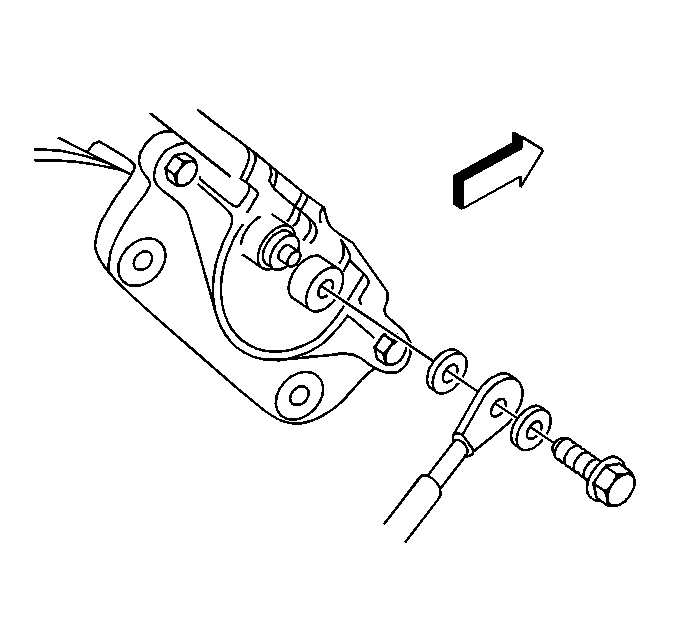
| 5.1. | Disconnect the brake hose fitting and two gaskets. |
| 5.2. | Discard the gaskets. |
| 5.3. | Plug the hole in the caliper housing, and in the brake hose fitting. |
Notice: Support the caliper with a piece of wire to prevent damage to the brake line.
Inspection Procedure
- Inspect the guide pin bolts and sleeves for corrosion.
- Inspect the linings for wear.
- Inspect the brake hose fitting bolt. If the through-hole is blocked, remove the blockage or replace the bolt.
Replace corroded guide pin bolts and sleeves.
Replace the brake pads if the linings are tapered beyond 0.15 mm (0.006 in).
Installation Procedure
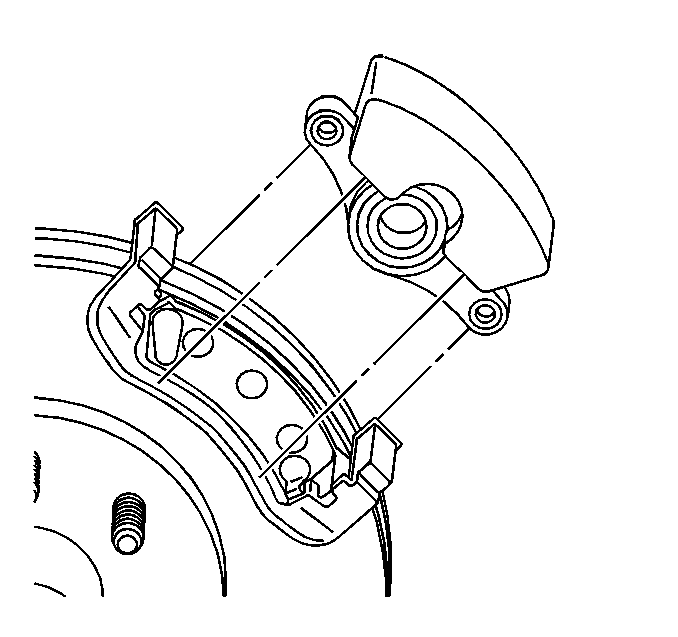
- Install the brake pads.
- Install the caliper over the rotor and into the anchor bracket.
- Install the guide pin bolts.
- Install the brake hose fitting, two new gaskets, and the brake hose fitting bolt.
- If you removed the brake hose fitting, bleed the brake hydraulic system. Refer to Hydraulic Brake System Bleeding in Hydraulic Brakes.
- Install the tire and wheel assembly. Refer to Tire and Wheel Removal and Installation in Tires and Wheels.
- Remove the safety stands and lower the vehicle.
- With the engine running, firmly pump the brake pedal three times.
- Check the brake system for leaks.
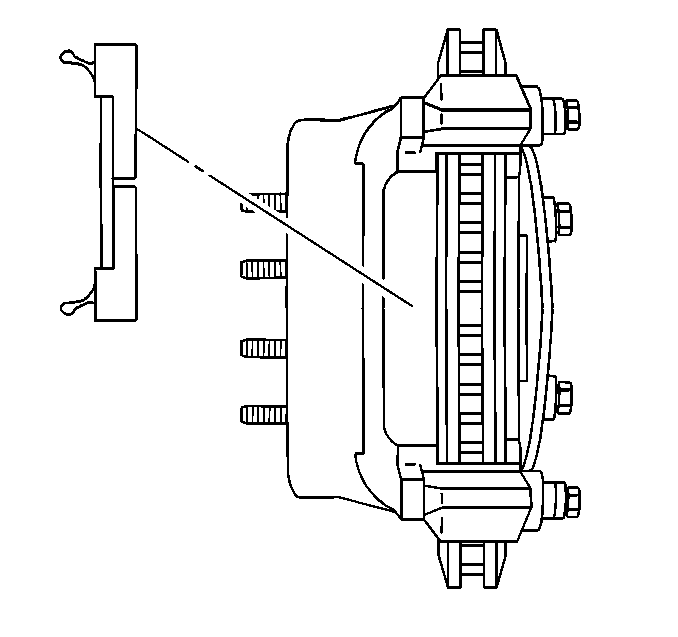
Important: Lift the inner edge caliper boot next to the piston. Press out any trapped air. The boot must lay flat below the level of the piston face.
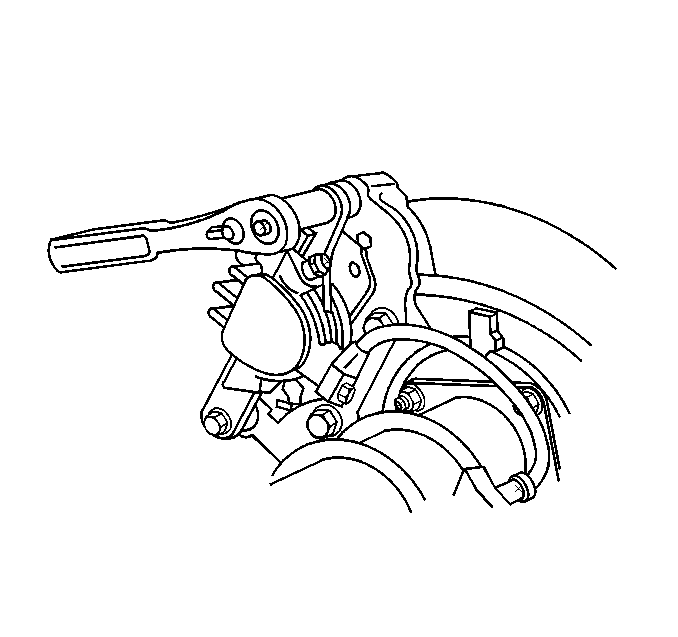
Notice: Use the correct fastener in the correct location. Replacement fasteners must be the correct part number for that application. Fasteners requiring replacement or fasteners requiring the use of thread locking compound or sealant are identified in the service procedure. Do not use paints, lubricants, or corrosion inhibitors on fasteners or fastener joint surfaces unless specified. These coatings affect fastener torque and joint clamping force and may damage the fastener. Use the correct tightening sequence and specifications when installing fasteners in order to avoid damage to parts and systems.
Tighten
Tighten the bolt to 31 N·m (23 lb ft).
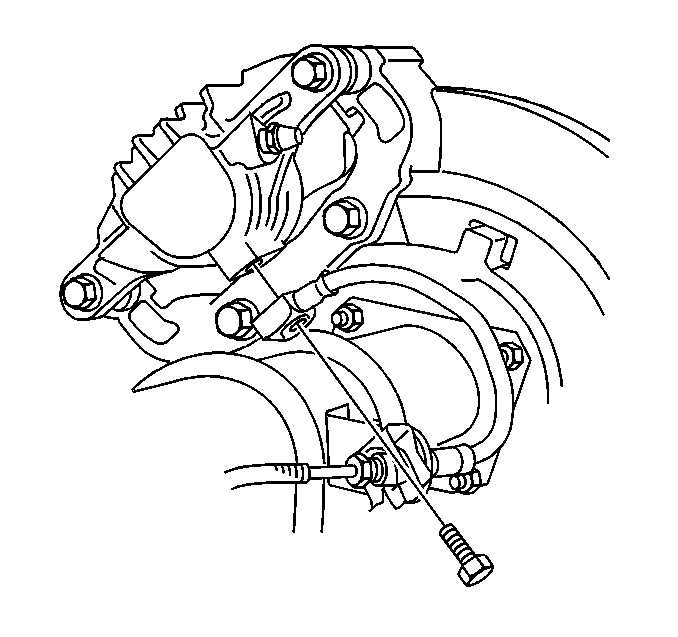
Notice: Make sure the brake hose is not twisted or kinked after installation. Damage to the hose could result.
Tighten
Tighten the brake hose bolt to 44 N·m (33 lb ft).
